


In today’s complex healthcare landscape, ensuring that your orthopedic and rheumatology practice is fully credentialed and enrolled with the right insurance payers is essential for maintaining a steady revenue stream. Insurance credentialing for orthopedic & rheumatology practices is detailed and can be time-consuming, often leading to cash flow disruptions if not properly managed. At CodeCure, we understand the intricacies of the credentialing and payer enrollment process and are committed to helping practices streamline credentialing so they can focus on patient care.
This comprehensive guide will explain the medical credentialing process step by step, highlight common challenges, offer expert tips, and show how partnering with credentialing professionals can fast‑track approvals and minimize claim denials.
What Is Orthopedic Credentialing and Why It Matter?
Insurance credentialing is the process through which healthcare providers are verified and approved by insurance companies to deliver medical services and receive reimbursement. During credentialing, insurance payers evaluate a provider’s qualifications, experience, professional history, and compliance status before allowing them to join the insurer’s provider network.
This verification process typically includes confirmation of:
- Medical licenses
- Education and residency training
- Board certifications
- Work history
- Malpractice insurance
- Hospital privileges
- Professional references
- Sanctions or disciplinary actions
- Insurance companies rely on credentialing to ensure that healthcare providers meet the required standards of professional competence and patient safety.
Most credentialing processes involve verification from trusted industry databases and organizations such as the National Practitioner Data Bank, the Office of Inspector General exclusion list, and the National Plan and Provider Enumeration System.
For orthopedic and rheumatology practices, credentialing is particularly important due to the specialized nature of services such as:
- Joint replacement surgery
- Spine procedures
- Sports injury treatment
- Musculoskeletal diagnostics
- Rheumatoid arthritis management
- Pain management procedures
Without proper credentialing, providers may be unable to treat insured patients or receive payment for services performed.
Why Credentialing Is Critical for Orthopedic and Rheumatology Practices
Credentialing plays a fundamental role in ensuring both compliance and financial stability for healthcare practices.
A properly credentialed practice can:
- Participate in insurance networks
- Bill payers without claim rejections
- Maintain compliance with healthcare regulations
- Improve patient access to care
- Avoid costly reimbursement delays
When credentialing is incomplete or inaccurate, providers may experience:
- Claim denials due to provider ineligibility
- Reimbursement delays
- Compliance violations
- Reduced patient access to insurance coverage
- Disruptions in practice cash flow
Orthopedic practices that perform complex procedures often rely on multiple payer contracts, making accurate credentialing even more essential for maintaining stable revenue.
Challenges Faced by Orthopedic Practices in Insurance Credentialing
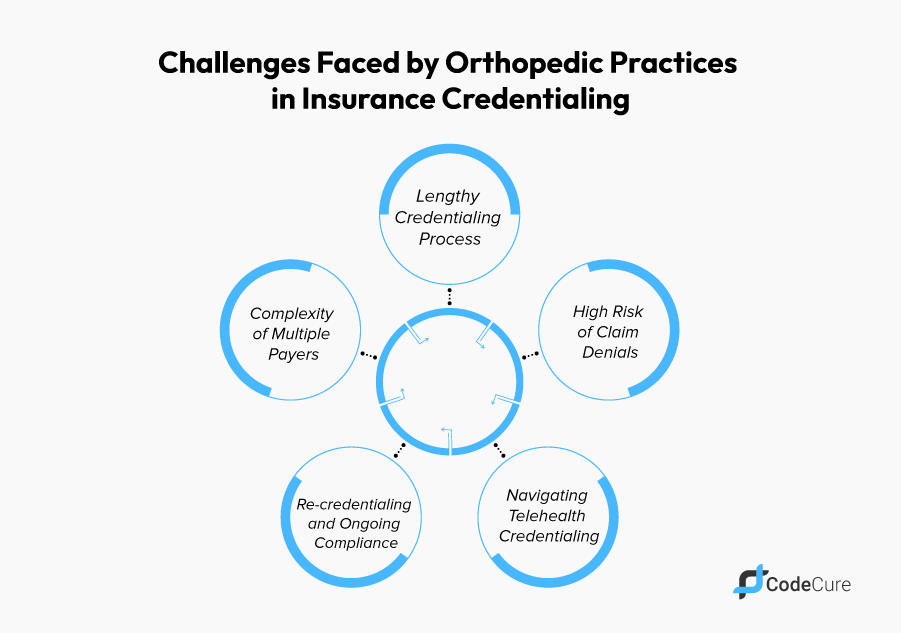
While credentialing is essential, the process can be extremely complex and time-consuming for medical practices.
Many orthopedic and rheumatology providers encounter several common challenges.
Lengthy Credentialing Timelines
The credentialing process can take 60 to 120 days, depending on the insurance payer and completeness of the application.
This delay can create financial strain for practices onboarding new providers who cannot bill insurance until credentialing is complete.
For example:
- Medicare enrollment may take 45–60 days
- Commercial payer approvals can take 90–120 days
- Hospital credentialing can take several months
Without proper planning, these delays can disrupt practice revenue cycles.
Managing Multiple Insurance Payers
Orthopedic practices typically contract with several commercial insurance companies, including:
- Aetna
- Cigna
- UnitedHealthcare
- Blue Cross Blue Shield
Each payer has different credentialing forms, documentation requirements, and approval procedures.
Managing these processes manually can overwhelm internal administrative staff.
Credentialing Errors and Application Rejections
Even small inconsistencies across documents can cause credentialing delays.
Common mistakes include:
- Mismatched provider names across documents
- Incomplete CAQH profiles
- Expired malpractice insurance
- Incorrect NPI numbers
- Missing board certification documentation
These issues can result in rejected applications and lengthy resubmission processes.
Re-Credentialing Requirements
Credentialing is not a one-time process.
Most insurance companies require providers to re-credential every 2–3 years to ensure that licenses, certifications, and compliance requirements remain valid.
Missing a re-credentialing deadline can lead to:
- Network termination
- Temporary loss of reimbursement privileges
- Administrative penalties
Proper tracking and management of these timelines is essential.
Telehealth Credentialing Requirements
Telehealth services have become increasingly common, especially for orthopedic consultations and follow-up care.
Providers offering telemedicine must ensure compliance with payer-specific telehealth credentialing requirements, which may include:
- State licensure verification
- Telemedicine provider disclosures
- Remote care billing guidelines
This adds another layer of complexity to the credentialing process.
Step-by-Step Orthopedic Credentialing Process
Credentialing involves several critical stages, each requiring careful documentation and compliance with payer guidelines.
Below is a simplified breakdown of the orthopedic credentialing process.
Step 1: Medicare and Medicaid Provider Enrollment
Enrollment with government healthcare programs is one of the most important credentialing steps for orthopedic practices. Providers must enroll with the Centers for Medicare & Medicaid Services before submitting claims for eligible patients.
Medicare Enrollment
Orthopedic providers must complete enrollment through the Medicare Provider Enrollment system.
This process includes submitting:
- CMS-855I provider enrollment form
- CMS-855R reassignment of benefits form
- National Provider Identifier verification
- Practice ownership documentation
Once approved, providers receive a Medicare PTAN (Provider Transaction Access Number).
Medicaid Enrollment
Medicaid credentialing varies by state but typically includes:
- Provider application submission
- State medical license verification
- NPI registration confirmation
- Compliance verification
Completing Medicaid enrollment allows orthopedic providers to serve low-income and elderly patient populations.
Step 2: Commercial Insurance Credentialing
Commercial insurance credentialing allows providers to join payer networks and bill private insurance companies. This stage often involves submitting credentialing applications to insurers such as:
This stage often involves submitting credentialing applications to insurers such as:
- UnitedHealthcare
- Cigna
- Aetna
- Blue Cross Blue Shield
Required documents typically include:
- State medical license
- Board certification
- DEA registration
- Malpractice insurance
- Curriculum vitae
- Hospital affiliations
After verification, providers may receive a payer contract outlining reimbursement rates and network participation terms.
Step 3: CAQH Profile Setup and Management
The credentialing process is often streamlined through the centralized credentialing database operated by CAQH. CAQH ProView allows healthcare providers to store their professional credentials in a secure database that insurance companies can access.
A properly maintained CAQH profile includes:
- Education history
- Training records
- Work experience
- License information
- Malpractice coverage
- Hospital privileges
Providers must attest their CAQH profiles every 120 days to keep their information active and accurate. Failure to maintain an updated CAQH profile can delay credentialing approvals.
Step 4: Hospital Privileges Credentialing
Many orthopedic procedures must be performed in hospitals or ambulatory surgery centers. As a result, orthopedic surgeons must obtain hospital privileges before performing surgical procedures.
Hospital credentialing involves submitting documentation such as:
- Surgical case logs
- Professional references
- Background checks
- Clinical competency evaluations
Hospitals typically require re-credentialing every one to two years. Maintaining hospital privileges ensures orthopedic surgeons can continue performing surgeries and procedures without interruption.
Step 5: Provider Network Enrollment and Contracting
After credentialing verification is complete, providers must finalize payer contracting agreements.
These agreements establish:
- Reimbursement rates
- Billing procedures
- Network participation status
- Compliance requirements
Understanding contract terms is critical for ensuring that orthopedic practices receive fair reimbursement for services.
Orthopedic Credentialing Application Checklist
Preparing the necessary documentation in advance can significantly accelerate the credentialing process.
Essential credentialing documents include:
Provider Identity Information
- Full legal name
- Date of birth
- Government ID
- Social Security number (for enrollment)
Provider Identification
- National Provider Identifier (NPI)
- NPI confirmation from NPPES
Medical Licensure
- Active state medical licenses
- License expiration dates
- License verification documentation
DEA Registration
- DEA certificate
- Controlled substance registration
- DEA expiration date
Education and Training
- Medical school diploma
- Residency certificates
- Fellowship documentation
- Training completion dates
Board Certification
- Certification status
- Certification board documentation
- Renewal dates
Professional Work History
- Updated CV
- Previous practice locations
- Hospital affiliations
Malpractice Insurance
- Current insurance policy
- Coverage limits
- Claims history
Compliance Verifications
- NPDB self-query
- OIG exclusion check
- HIPAA compliance documentation
Having these documents readily available helps avoid delays during credentialing submissions.
Credentialing Timeline Overview
The credentialing timeline varies depending on the payer and documentation completeness.
Typical approval timelines include:
| Credentialing Step | Average Time |
|---|---|
| CAQH profile creation | 1–3 days |
| Medicare enrollment | 45–60 days |
| Medicaid enrollment | 30–90 days |
| Commercial payer credentialing | 60–120 days |
| Hospital privileges | 30–90 days |
Starting credentialing at least 3-4 months before a provider’s start date is recommended.
Benefits of Outsourcing Credentialing Services
Many healthcare organizations choose to outsource credentialing to specialized healthcare revenue cycle management providers.
Professional credentialing services offer several advantages.
Faster Provider Approvals
Experienced credentialing specialists understand payer requirements and can accelerate application approvals.
Reduced Administrative Burden
Credentialing tasks can consume significant staff time. Outsourcing allows internal teams to focus on patient care and operations.
Fewer Application Errors
Credentialing professionals help ensure accuracy across documents, reducing the risk of rejected applications.
Improved Revenue Cycle Performance
Faster credentialing approvals allow providers to begin billing sooner, improving practice cash flow.
How CodeCure Can Help Streamline Your Orthopedic Credentialing Process
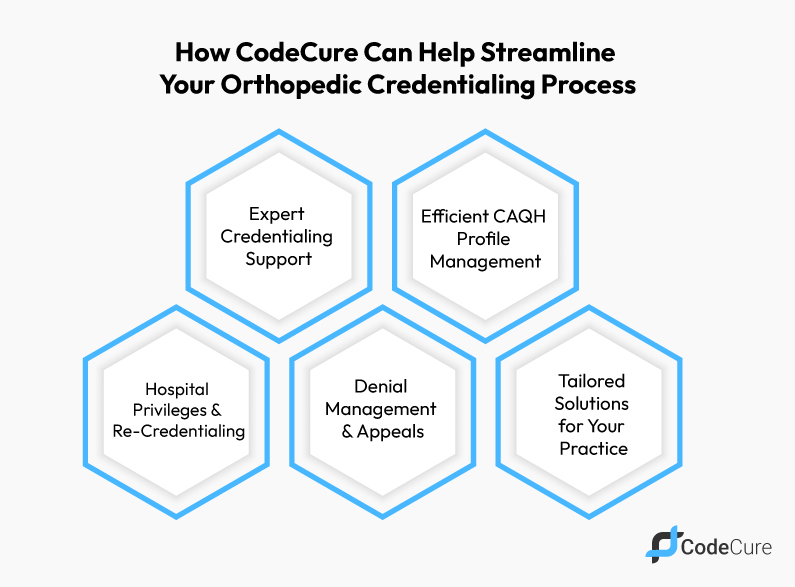
CodeCure provides comprehensive credentialing and provider enrollment services tailored to orthopedic and rheumatology practices.
Our credentialing experts manage the entire process, including:
- Medicare and Medicaid enrollment
- Commercial payer credentialing
- CAQH profile setup and management
- Hospital privilege applications
- Re-credentialing tracking
- Credentialing compliance audits
- Denial management and appeals
We work closely with healthcare practices to ensure that credentialing applications are submitted accurately and approved as quickly as possible.
Our goal is to eliminate administrative obstacles and help providers maintain uninterrupted revenue cycles.
Conclusion
Insurance credentialing is one of the most important administrative processes for orthopedic and rheumatology practices. Proper credentialing ensures providers can participate in insurance networks, receive reimbursement for services, and maintain compliance with healthcare regulations.
However, the credentialing process can be complex and time-consuming when managed internally. By partnering with experienced credentialing professionals like CodeCure, practices can streamline provider enrollment, reduce delays, and ensure faster approvals across Medicare, Medicaid, and commercial insurance payers.
With expert credentialing support, orthopedic providers can focus on delivering exceptional patient care while maintaining a stable and efficient revenue cycle.
Frequently Asked Questions
What is orthopedic insurance credentialing?
Orthopedic credentialing is the process of verifying that orthopedic surgeons and providers meet insurance payer requirements to deliver medical services and receive reimbursement.
How long does the credentialing process take?
Credentialing timelines vary by payer but typically range from 60 to 120 days for commercial insurers.
What documents are required for credentialing?
Credentialing requires several documents including medical licenses, board certifications, malpractice insurance, DEA registration, work history, and hospital affiliations.
What is CAQH and why is it important?
The CAQH ProView system allows providers to maintain a centralized profile of credentials that insurance companies use during verification.
Can providers bill insurance before credentialing is approved?
No. Providers must be fully credentialed and enrolled with an insurance payer before submitting claims.
How often must providers re-credential?
Most insurance companies require re-credentialing every two to three years.
What causes credentialing delays?
Common causes include incomplete applications, expired documents, inconsistent provider information, and outdated CAQH profiles.