

Even with a full patient schedule, revenue delays are still a common challenge for healthcare providers. The problem isn’t demand; it’s credentialing inefficiencies. Outdated licenses, incomplete CAQH profiles, missed re-attestations, and documentation gaps can quickly stall payer approvals and delay billing.
In high-volume states like Texas, California, Florida, New York, and Illinois, even small errors can extend enrollment timelines by 60–120 days, directly impacting cash flow. With nearly 48% of Medicare beneficiaries now in Medicare Advantage and administrative complexity rising in 2026, maintaining an accurate CAQH profile is essential. This guide shows how to streamline credentialing, reduce delays, and keep revenue flowing consistently.
What Is CAQH Credentialing?
CAQH credentialing is a centralized process that allows healthcare providers to submit their professional and practice information once and share it with multiple payers through a single platform.
Using the CAQH ProView portal, providers upload key data such as licenses, certifications, malpractice insurance, education, and work history. This information is verified through primary sources and then made accessible to insurance companies for credentialing and enrollment decisions.
A complete CAQH profile typically includes:
-
State Licenses and Certifications
Providers must upload all active licenses and certifications to demonstrate eligibility to practice. Expired or missing licenses can immediately halt credentialing. Regular updates ensure compliance with state boards and prevent delays during payer review. -
Board Certifications and DEA Registration
Board certifications validate a provider’s specialty, while DEA registration is essential for prescribing controlled substances. Missing or outdated DEA details can trigger verification issues and slow down enrollment timelines. -
Malpractice Insurance Coverage
Payers require proof of active malpractice insurance, including policy limits and expiration dates. Any lapse in coverage can delay approvals or result in enrollment rejection, making real-time tracking essential. -
Education and Training History
Accurate documentation of medical education, residencies, and fellowships supports credential verification. Inconsistent or incomplete records often lead to additional verification requests from payers. -
Work History and Practice Locations
Providers must list all previous employment and current practice locations. Gaps in work history or incorrect addresses can raise red flags during credentialing reviews.
Maintaining a complete and accurate CAQH profile ensures faster enrollment, fewer claim issues, and smoother payer communication.
Why CAQH Credentialing Matters in 2026
CAQH credentialing has evolved into a critical component of revenue cycle management. It directly impacts how quickly providers can join insurance networks and begin billing for services.
Key benefits include:
-
Faster Payer Enrollment
A complete and verified CAQH profile allows insurers to process credentialing applications more efficiently. This reduces delays in network participation and enables providers to begin billing sooner. -
Reduced Claim Denials
Credentialing mismatches are a common cause of claim rejections. Keeping CAQH data accurate ensures alignment with payer records, minimizing denials related to provider eligibility. -
Improved Compliance and Audit Readiness
Up-to-date credentialing data helps providers meet regulatory requirements and avoid audit risks. Proper documentation ensures readiness for payer verification at any time. -
Streamlined Administrative Workflows
Instead of submitting credentials separately to each payer, providers can manage all information through one centralized system. This reduces administrative burden and improves efficiency.
In today’s healthcare environment, CAQH credentialing is not just administrative; it’s a foundational strategy for maintaining consistent revenue flow.
Workflow of CAQH Credentialing
Understanding the credentialing workflow helps providers avoid delays and maintain compliance throughout the enrollment process.
Step 1: Registration & Profile Creation
Healthcare providers, nurse practitioners, and medical groups begin by creating an account on the CAQH ProView portal. Once registered, they input essential professional and licensure information, including:
- State licenses and board certifications
- DEA registration and other controlled substance authorizations
- Malpractice insurance details and claims history
- Education, training, and work history
- Practice locations and contact information
This centralized submission reduces redundancy, ensures consistent data across multiple payers, and lays the foundation for faster network approval.
Step 2: Verification & Primary Source Checks
After the profile is completed, CAQH performs primary-source verification to confirm the accuracy of submitted credentials. This verification ensures that licenses, certifications, and insurance information are valid, current, and compliant with federal and state regulations. Accurate data at this stage prevents payer rejections and credentialing delays.
Step 3: Attestation & Updates
Providers must attest to their profile’s accuracy every 90–120 days. In 2026, missing re-attestation is one of the most common causes of delayed approvals. Providers should also update their profile immediately whenever there are changes in:
- Licenses or certifications
- Employment or practice location
- Malpractice insurance coverage
Regular attestation keeps the profile audit-ready and ensures uninterrupted payer enrollment.
Step 4: Data Sharing with Payers
Once verified and attested, the provider’s CAQH profile is shared securely with participating insurers, health plans, and networks. This enables payers to quickly complete credentialing, approve contracts, and facilitate timely claims reimbursement.
Step 5: Ongoing Maintenance & Compliance
Even after enrollment, maintaining a current profile is essential. Professional CAQH credentialing services can help monitor deadlines, track changes, and ensure continuous compliance, preventing re-enrollment delays, claim denials, or network removal.
Why Following This Workflow Matters:
- Reduces administrative burden and repetitive paperwork
- Minimizes delays in payer enrollment and claims processing
- Improves compliance and reduces audit risk
- Supports faster revenue capture for solo providers, NPs, and large medical groups
In 2026, efficient CAQH credentialing workflows are not just administrative; they are a critical revenue protection strategy for healthcare providers and nurse practitioners.
Key Requirements for CAQH Credentialing in 2026: Provider & NP Checklist
To avoid delays, denials, and revenue interruptions, healthcare providers must ensure their CAQH profiles are complete, accurate, and audit-ready. Use this CAQH credentialing checklist to stay compliant in 2026:
- Licenses & Certifications
- Current state medical or nursing licenses
- Board certifications (if applicable)
- DEA registration and controlled substance authorizations
- Education & Training Records
- Medical school, nursing school, or NP program details
- Residency and fellowship completion dates
- Continuing education or specialty certifications
- Work History & Practice Details
- Previous employers with accurate dates
- Practice locations and contact information
- Current practice ownership or partnerships
- Malpractice Insurance
- Active policy coverage and limits
- Policy number and expiration date
- Claims history, if any
- Re-Attestation Compliance
- Attest to profile accuracy every 90–120 days
- Immediate updates for any changes in licenses, employment, or insurance
- Audit-ready documentation for payers
- Additional Documentation
- Board or specialty certifications
- Hospital affiliations, if required by payer
- State-specific credentials (e.g., Medicaid IDs, CAQH additional forms)
- Multi-Payer & Network Coordination
- Ensure profile is verified and shared with all participating insurers
- Confirm any payer-specific requirements or additional documents
- Monitor enrollment status and pending approvals
- Professional Support (Optional but Recommended)
- Use CAQH credentialing services to manage updates, attestation reminders, and compliance monitoring
- Reduce administrative burden and speed up payer enrollment
- Protect revenue and ensure uninterrupted claims reimbursement
Signs Your Credentialing Process Is Hurting Revenue
Credentialing inefficiencies often go unnoticed until they impact financial performance. Recognizing early warning signs is essential.
-
Claims Denied Due to “Provider Not Enrolled”
This indicates incomplete or delayed credentialing. Providers may be treating patients but unable to bill insurers, leading to revenue loss. -
Enrollment Delays Beyond 60–90 Days
Extended timelines suggest issues with documentation, verification, or payer communication. These delays directly impact cash flow. -
Frequent Document Resubmissions
Repeated corrections point to data inaccuracies or missing information, increasing administrative workload and slowing approvals. -
Revenue Gaps Despite High Patient Volume
When patient visits remain steady but revenue declines, credentialing delays are often the underlying cause. -
Repeated Payer Follow-Ups
Constant requests for additional information signal incomplete submissions and inefficient credentialing workflows.
Common CAQH Credentialing Challenges
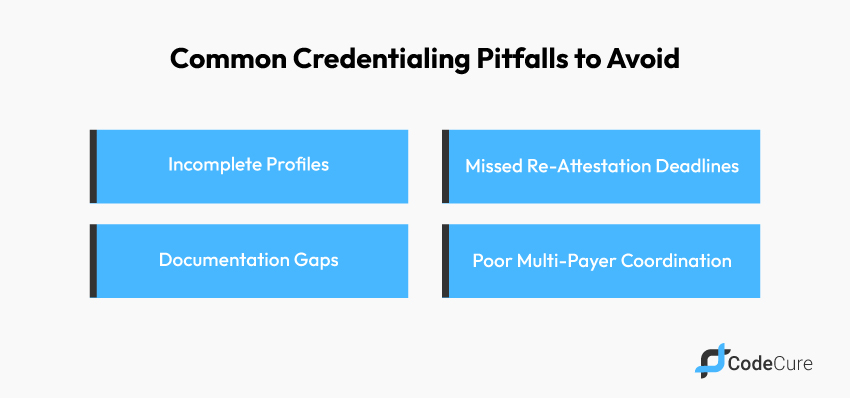
Credentialing challenges are usually operational rather than technical.
-
Incomplete Provider Profiles
Missing or outdated information can delay verification and approval. Even small discrepancies may require additional review. -
Missed Re-Attestation Deadlines
Inactive profiles restrict payer access, pausing credentialing and delaying enrollment. -
Documentation Gaps
Missing or expired documents, such as malpractice insurance or DEA registration, can halt the process entirely. -
Payer-Specific Requirements
Some insurers require additional forms beyond CAQH. Failing to meet these requirements leads to repeated delays.
Best Practices for Faster CAQH Approvals
Implementing structured workflows improves credentialing efficiency.
-
Centralized Credentialing Database
Maintaining all provider documents in one system ensures easy access, reduces duplication, and improves accuracy across submissions. -
Quarterly Profile Audits
Regular reviews help identify outdated information before it becomes a problem, ensuring profiles remain compliant and complete. -
Automated Re-Attestation Reminders
Setting alerts for re-attestation deadlines prevents profiles from becoming inactive and ensures uninterrupted payer access. -
Expiration Tracking for Licenses and Insurance
Monitoring expiration dates helps avoid last-minute updates and prevents credentialing delays caused by expired documents. -
Alignment with Payer Requirements
Ensuring CAQH data matches payer-specific requirements reduces rework and accelerates approval timelines.
When to Outsource CAQH Credentialing
Outsourcing credentialing can improve efficiency and reduce internal workload.
-
Managing Multiple Providers or Locations
Larger practices often struggle to track credentialing requirements across multiple providers, making outsourcing more efficient. -
Frequent Credentialing Errors
Recurring issues indicate the need for specialized expertise to improve accuracy and streamline workflows. -
Limited Administrative Resources
Smaller practices may lack the staff needed to manage credentialing effectively, leading to delays. -
Expansion into New Markets
Credentialing requirements vary by state and payer, making external support valuable during expansion. -
Need for Faster Enrollment
Professional services can accelerate credentialing timelines and improve revenue flow.
How Professional CAQH Credentialing Services Improve Performance
Specialized credentialing services enhance both operational efficiency and financial outcomes.
-
Faster Enrollment Timelines
Experts ensure accurate submissions and proactive follow-ups, reducing delays in payer approvals. -
Reduced Claim Denials
Accurate credentialing data minimizes mismatches that lead to claim rejections. -
Improved Compliance
Continuous monitoring ensures all credentials remain valid and up to date. -
Lower Administrative Burden
Outsourcing frees up staff to focus on patient care and front-office operations. -
Stable Cash Flow
Consistent credentialing ensures uninterrupted billing and reimbursement cycles.
How CodeCure Supports CAQH Credentialing
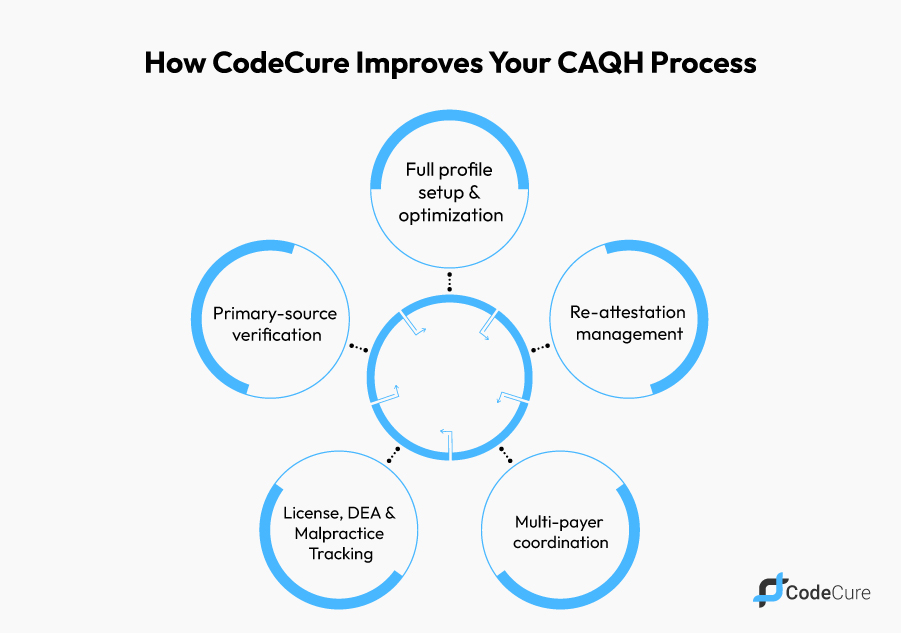
Credentialing delays often result from inconsistent tracking and manual processes. CodeCure simplifies CAQH credentialing by managing the entire process from start to finish.
Services include profile setup, document verification, re-attestation tracking, license monitoring, and payer coordination. By maintaining accurate and compliant profiles, CodeCure helps providers reduce delays, prevent claim issues, and maintain steady revenue.
Conclusion
In 2026, CAQH credentialing is a critical factor in payer enrollment, billing readiness, and revenue stability. Inaccurate or inactive profiles can delay approvals, disrupt claims, and slow reimbursement cycles. Providers who adopt a proactive credentialing strategy benefit from faster enrollment, fewer denials, and consistent cash flow.
Partner with CodeCure to streamline your CAQH credentialing, accelerate payer enrollment, and protect your revenue cycle. Schedule your consultation today.
FAQs:
1. What is CAQH credentialing?
A centralized system for verifying provider credentials and sharing them with insurers.
2. How long does it take?
Typically 30–60 days, depending on accuracy and payer requirements.
3. How often should profiles be updated?
Every 90–120 days through re-attestation.
4. What documents are required?
Licenses, DEA registration, malpractice insurance, and work history.
5. Can delays affect revenue?
Yes, they can delay billing and reimbursement.
6. Do all payers use CAQH?
Most do, but some require additional documentation.
7. Should credentialing be outsourced?
Outsourcing improves efficiency, accuracy, and enrollment speed.