

Accurate EGD CPT coding is crucial for gastroenterology practices and endoscopy centers. Mistakes can lead to claim denials, delayed reimbursements, or revenue loss. This guide covers every CPT code for EGD procedures in 2026, including diagnostic, therapeutic, advanced, and ablation procedures, plus tips to avoid errors. Partner with CodeCure Medical Billing for reliable, U.S.-based billing services that maximize reimbursement and ensure compliance.
What is Esophagogastroduodenoscopy (EGD)?
Esophagogastroduodenoscopy (EGD) is an upper gastrointestinal procedure that allows physicians to examine the esophagus, stomach, and duodenum using a flexible endoscope. It is crucial for diagnosing a wide range of conditions, such as:
- Gastroesophageal reflux disease (GERD)
- Esophageal cancer
- Peptic ulcers
- Gastritis
- Celiac disease
- Esophageal varices
In addition to its diagnostic capabilities, EGD is therapeutic, allowing for interventions like biopsy collection, removal of foreign bodies, stricture dilation, and banding of varices.
Why Accurate EGD Coding Matters
Accurate coding for EGD procedures is critical for several reasons:
- Proper Reimbursement: Insurers reimburse healthcare providers based on the CPT codes submitted. Incorrect coding can lead to delays, denials, or underpayments.
- Regulatory Compliance: Adhering to coding standards ensures compliance with guidelines like the National Correct Coding Initiative (NCCI), helping avoid audits and penalties.
- Documenting Medical Necessity: Accurate coding also helps demonstrate the medical necessity of a procedure, which is essential for insurance approval.
For healthcare providers, using the correct CPT code is essential to avoid revenue loss and ensure timely and accurate reimbursement.
Common EGD CPT Codes and Their Usage
Below, we’ll break down the key EGD CPT codes that medical coders commonly encounter. These codes reflect a variety of diagnostic and therapeutic procedures.
1. Diagnostic EGD Codes
- CPT Code 43235: Diagnostic EGD (Flexible, Transoral)
This is the most common code for a standard diagnostic EGD, used when the procedure is performed to visually examine the upper GI tract without any therapeutic interventions (e.g., biopsies or treatments). - CPT Code 43236: EGD with Directed Submucosal Injection
This code applies when a physician uses a directed submucosal injection during the procedure, which is typically done to mark a lesion for future therapy or biopsy.
2. Therapeutic EGD Codes
- CPT Code 43239: EGD with Biopsy (Single or Multiple)
When tissue samples are taken for diagnostic purposes, this code is used. It covers the collection of biopsies from the esophagus, stomach, or duodenum for testing for conditions like cancer or infections. - CPT Code 43244: Banding of Esophageal/Gastric Varices
This code is used when the physician bands varices in the esophagus or stomach. Variceal banding is a therapeutic procedure typically performed in patients with liver disease to prevent bleeding. - CPT Code 43245: EGD with Dilation of Strictures
If the physician performs dilation of an esophageal or gastric stricture (narrowing of the passage), this code applies. The procedure is often used for patients with swallowing difficulties due to strictures caused by GERD or scarring. - CPT Code 43266: EGD with Placement of Endoscopic Stent
Used when a stent is placed during EGD to open blocked areas in the esophagus, stomach, or duodenum. This procedure is typically done to treat obstructions from tumors or other gastrointestinal conditions.
3. Additional Therapeutic EGD Codes
- CPT Code 43250: Removal of Polyps or Foreign Bodies
This code applies when the physician removes polyps or foreign bodies from the esophagus, stomach, or duodenum during the EGD. - CPT Code 43255: EGD with Control of Bleeding
This code is used when a physician employs endoscopic methods (e.g., injection therapy, cautery) to control active GI bleeding during the procedure.
What are the EGD Coding Challenges
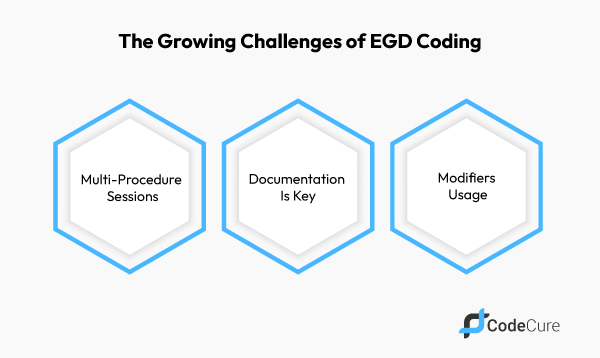
1. Multi-Procedure Sessions
Often, an EGD may involve multiple therapeutic interventions in one session. For example, a patient may need dilation, biopsy, and banding during a single procedure. Accurate coding requires selecting the correct codes for each intervention, along with any necessary modifiers (e.g., modifier 59 for distinct procedures).
2. Documentation Is Key
Accurate documentation is essential for proper coding. If the physician’s notes are vague or incomplete, it can lead to incorrect coding or claim denials. Coders must ensure the procedure, findings, and any therapeutic interventions are fully documented.
3. Modifiers Usage
Modifiers provide additional detail about the procedure. For instance:
- Modifier 59: Used when multiple distinct procedures are performed during a single session.
- Modifier 22: Indicates that the procedure was more complex than usual and required additional work.
- Modifier 51: Used when multiple procedures are performed, but one is considered a secondary procedure.
Moderate Sedation Billing Rule
Since January 1, 2017, moderate sedation is no longer bundled into EGD CPT codes.
If moderate sedation is provided, it must be billed separately using the appropriate HCPCS or CPT moderate sedation codes, following payer-specific rules. Failure to do so often results in underpayment.
The Impact of ICD-10 Codes on EGD Procedures
In addition to CPT codes, ICD-10 diagnosis codes are also used to report the medical reason for performing an EGD. The ICD-10 codes should align with the CPT codes to reflect the patient’s condition accurately. For example:
- CPT Code 43235 (Diagnostic EGD) might be linked with an ICD-10 code for symptoms like dysphagia (difficulty swallowing) or GERD.
- CPT Code 43239 (EGD with Biopsy) might be linked with a code for suspected esophageal cancer.
EGD Coding Cheat Sheet
Here’s a quick reference table that summarizes the most common EGD CPT codes and their uses:
| CPT Code | Description | Usage | |
| 43235 | Diagnostic EGD (Flexible, Transoral) | Basic visual examination of the upper GI tract | |
| 43236 | EGD with Directed Submucosal Injection | Used when submucosal injection is performed | |
| 43239 | EGD with Biopsy (Single or Multiple) | When tissue samples are collected | |
| 43244 | Banding of Esophageal/Gastric Varices | For therapeutic banding to prevent bleeding | |
| 43245 | EGD with Dilation of Strictures | Used for dilation of strictures in esophagus or stomach | |
| 43266 | EGD with Placement of Endoscopic Stent | Placement of stent for obstruction | |
| 43250 | Removal of Polyps or Foreign Bodies | Removal of polyps or foreign bodies from the GI tract | |
| 43255 | EGD with Control of Bleeding (Any Method) | For controlling gastrointestinal bleeding |
How CodeCure can streamline the EGD Coding for your Practice
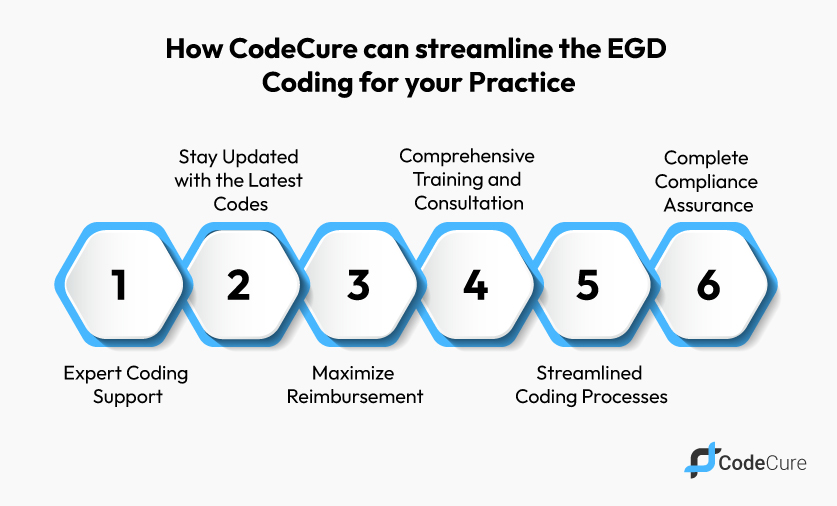
CodeCure provides comprehensive coding solutions for healthcare practices, offering expertise in medical billing, coding accuracy, and regulatory compliance. Here’s how CodeCure can streamline the EGD coding process for your practice:
1. Expert Coding Support
- Certified Coders: CodeCure provides a team of experienced and certified coders who specialize in accurate and efficient coding.
- Complex Procedures Made Simple: We handle all coding complexities, from EGD to multi-procedure sessions, ensuring you never miss a code.
2. Stay Updated with the Latest Codes
- Timely Updates: With frequent changes in CPT and ICD-10 codes, CodeCure ensures your practice is always compliant and up-to-date with the latest coding standards.
- Code Accuracy: We track all updates, helping you avoid errors and ensuring maximum reimbursement.
3. Maximize Reimbursement
- Accurate Billing: Our expert coders ensure that every procedure is billed correctly, reducing underpayments and claim denials.
- Optimized Claims: By selecting the right codes and modifiers (like modifier 59), we help you avoid revenue loss and improve cash flow.
4. Comprehensive Training and Consultation
- Training for In-House Teams: We offer tailored training to your coding staff, ensuring they understand how to handle complex EGD procedures and other codes.
- Ongoing Consultation: CodeCure provides continuous support, answering your coding questions and providing solutions to coding challenges.
5. Streamlined Coding Processes
- Faster Claims Processing: With CodeCure’s support, your coding process becomes more streamlined, allowing you to submit claims more quickly and with confidence.
- Reduced Claim Rejections: By ensuring proper documentation and coding, CodeCure helps reduce the chances of claims being rejected or delayed.
6. Complete Compliance Assurance
- Regulatory Compliance: We ensure your practice stays compliant with all insurance regulations, the National Correct Coding Initiative (NCCI), and other healthcare guidelines.
- Risk Reduction: Minimize the risk of audits and penalties with our expertise in navigating the complexities of medical coding.
Final Thoughts
EGD coding can seem complex, but once you understand the various CPT codes and their correct applications, it becomes a straightforward process. The key to success is accurate documentation, knowing the nuances of each code, and ensuring that the right modifiers are used when necessary. By following the tips and best practices outlined here, coders can ensure that EGD procedures are billed accurately, leading to proper reimbursement and regulatory compliance. And by using the cheat sheet, you’ll have a quick reference at your fingertips for more efficient coding.
Partner with Code Cure today to streamline your medical coding process, enhance compliance, and maximize reimbursement rates. Contact us now to learn how we can help optimize your coding practices and take the stress out of medical billing.
FAQs
What is the CPT code for esophagogastroduodenoscopy (EGD)?
The most commonly used CPT code for esophagogastroduodenoscopy (EGD) is 43235, which represents a diagnostic upper GI endoscopy without biopsy or therapeutic intervention. If a biopsy or treatment is performed during the procedure, a different therapeutic CPT code must be reported instead.
What is the CPT code for EGD with biopsy?
The CPT code for EGD with biopsy is 43239. This code is used when tissue samples are taken from the esophagus, stomach, or duodenum during the procedure. Multiple biopsies are included in this code and should not be billed separately.
Can CPT 43235 and 43239 be billed together?
No, CPT 43235 cannot be billed with CPT 43239. When a biopsy is performed, the diagnostic EGD code (43235) is bundled and replaced by the therapeutic code 43239.
Does Medicare cover EGD procedures?
Yes, Medicare covers EGD procedures when they are medically necessary. Coverage depends on proper CPT coding, supported ICD-10 diagnosis codes, and compliance with Medicare billing guidelines. Screening EGDs are generally not covered unless specific criteria are met.
Is Modifier 59 allowed for EGD CPT codes?
Modifier 59 may be used with EGD CPT codes only when distinct procedures are performed on separate anatomical sites and when allowed under NCCI edits. Medicare closely reviews modifier 59 usage, and improper application may result in claim denials or audits.
Is Modifier 51 required for Medicare EGD billing?
In most cases, Modifier 51 is not required for Medicare EGD claims. Medicare automatically applies multiple procedure payment reductions when applicable, making Modifier 51 unnecessary for most EGD services.
Why are EGD claims denied by Medicare?
Common reasons Medicare denies EGD claims include incorrect CPT coding, unsupported ICD-10 diagnoses, improper modifier usage, incomplete documentation, and violations of NCCI bundling rules. Most denials are preventable with accurate coding and thorough documentation.
How can practices reduce EGD billing errors?
Practices can reduce EGD billing errors by following NCCI guidelines, avoiding unbundling, ensuring complete procedure documentation, verifying medical necessity, and working with medical billing professionals who understand Medicare compliance.
Can I report both 43235 and 43239 together?
No, because 43239 includes biopsy and absorbs the basic diagnostic component. Use the one that best reflects the service performed.
When should I use modifier 59 with EGD?
If two distinct services are done in the same session that are not normally bundled, apply modifier 59 to the secondary service.
What CPT code should an EGD that includes dilation have?
Use the CPT code specific to the dilation performed (e.g., 43245, or 43249, depending on location and method).