


Credentialing is one of those behind-the-scenes processes that quietly determines whether your healthcare practice gets paid or struggles with delayed reimbursements. Despite its importance, credentialing is often overlooked or misunderstood, especially when it comes to budgeting for small and solo practices. One common question healthcare providers frequently ask is: How much does credentialing cost? Understanding these costs is crucial for effective financial planning, as credentialing directly impacts the operational efficiency and cash flow of healthcare practices. This article will break down credentialing costs, explain the factors that influence them, highlight common errors, outline the benefits, and provide tips for managing costs efficiently.
What is Credentialing for Healthcare Providers?
Credentialing is the formal process used by healthcare organizations, insurance companies, and government programs like Medicare and Medicaid to verify the qualifications, training, and professional background of healthcare providers. This process ensures that healthcare professionals meet the required standards to provide safe and effective care to patients and are eligible for reimbursement for their services.
Key Elements of the Healthcare Credentialing Process:
- Licensure Verification: Healthcare providers must hold a valid, active medical license in the state where they practice.
- Educational Background: Verifying the provider’s educational credentials, such as graduation from an accredited medical school or nursing program.
- Professional Experience: Ensuring the provider’s work history and clinical practice meet industry standards.
- Specialized Certifications and Board Accreditations: Depending on the medical specialty, healthcare providers may need specific certifications or board accreditations to demonstrate their expertise.
Credentialing ensures that healthcare providers meet the standards required by insurers and government programs, allowing them to be reimbursed for their services.
Why Credentialing is Critical for Healthcare Providers
Credentialing is more than just a regulatory requirement. It’s essential for ensuring patient safety, maintaining legal compliance, and securing reimbursement from insurers. Insurance companies, government programs like Medicare and Medicaid, and other payers only reimburse services delivered by credentialed professionals. If a healthcare provider is not credentialed, they cannot bill insurance providers, which leads to cash flow issues and potential revenue loss.
In addition to these practical benefits, credentialing also helps establish a provider’s reputation as a qualified and competent professional, which builds trust with patients and protects practices from legal and regulatory challenges.
What Factors Affect Credentialing Costs?
Several factors influence the overall cost of credentialing for healthcare providers. The primary elements that contribute to credentialing costs include:
1. Number of Payers
The more insurance payers and government programs a healthcare provider needs to be credentialed with, the higher the cost. Each payer requires a separate application, verification process, and documentation, which adds to the overall workload.
Example: Credentialing with Medicare, Medicaid, and several private insurers can significantly increase the workload and associated costs. Practices need to be prepared for the additional paperwork and fees when working with multiple payers.
2. Provider Specialty
Certain healthcare specialties require a more complex credentialing process. For example, cardiologists, neurosurgeons, oncologists, and other specialists face more stringent credentialing requirements due to their advanced certifications, extensive training, and the nature of their practice. As a result, credentialing costs for specialists tend to be higher.
On the other hand, credentialing for primary care providers (PCPs) like family medicine or internal medicine practitioners is generally simpler and less expensive due to standardized documentation requirements.
3. State Regulations
Credentialing costs vary by state due to differing licensing and certification requirements. Some states have stricter regulatory environments that require additional documentation, verification, and background checks, leading to higher credentialing costs.
4. Number of Providers
The size of the healthcare practice also impacts credentialing costs. Larger practices, hospitals, or multi-provider clinics face higher costs because each provider must go through the credentialing process. While many large practices outsource credentialing to reduce administrative burden, smaller practices may handle it in-house. However, in-house credentialing can result in hidden costs such as administrative staff time and technology requirements.
5. Third-Party Credentialing vs. In-House Credentialing
Outsourcing credentialing to professional credentialing agencies is common, even though it raises upfront costs. Outsourcing saves time, reduces errors, and ensures faster processing. In contrast, in-house credentialing offers more control but comes with hidden costs, including administrative time, training, and document management.
Credentialing Cost Breakdown
Here’s a rough overview of what healthcare providers can expect to pay for credentialing services:
| Credentialing Type | Estimated Cost Range |
| Initial Credentialing | $300 – $1,000 |
| Recredentialing | $100 – $500 |
| Outsourcing Credentialing | $500 – $2,500 |
| Administrative Time (Hourly) | $50 – $150 per hour |
Please note that these are rough estimates. The final cost can vary depending on several factors like the provider’s specialty, the number of payers, and state-specific requirements.
How Credentialing Costs Vary by Specialty
Credentialing costs can vary greatly depending on the provider’s specialty. Highly specialized fields tend to have more complex documentation requirements and verification processes, which lead to higher credentialing costs. Here’s a breakdown of credentialing costs by specialty:
1. Primary Care Providers (PCPs)
Credentialing for family medicine, internal medicine, and general practice providers is typically straightforward, and standard documentation keeps costs relatively low.
Example: A family medicine practitioner may incur initial credentialing costs of $500 to $800 for the verification of education, licensure, and insurance network participation.
2. Specialists
Specialists such as orthopedic surgeons, cardiologists, and neurologists face a more complex credentialing process due to their specialized training, advanced certifications, and additional documentation.
Example: A cardiologist may face credentialing costs ranging from $1,000 to $2,500 due to the need for advanced certifications and more detailed documentation.
3. Behavioral Health Providers
Credentialing for mental health professionals, including psychiatrists and psychologists, involves considerable documentation but is generally less complex than for surgical or medical specialists.
Example: A clinical psychologist may experience credentialing costs from $500 to $1,500 per provider, depending on the networks they seek to join.
4. Surgical Specialists
Surgeons in highly specialized fields like neurosurgery or cardiothoracic surgery face the highest credentialing costs. The process involves verifying multiple certifications, surgical privileges, and additional state-specific documentation.
Example: A neurosurgeon may incur credentialing costs from $1,500 to $3,000 due to the thorough vetting process.
Errors in Credentialing and How to Avoid Them
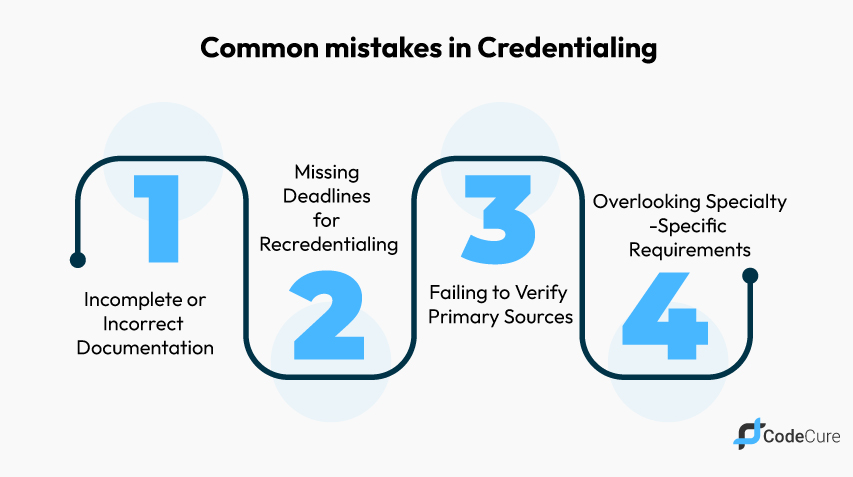
Credentialing errors can delay the process or prevent reimbursement altogether. Here are common mistakes and tips to avoid them:
Image: common mistakes in Credentialing
- Incomplete or Incorrect Documentation
Incomplete or inaccurate documentation can lead to delays and prevent the approval of the provider’s application.
How to Avoid It: Double-check all documents before submission and maintain a digital system for easy updates and access.
2. Missing Deadlines for Recredentialing
Providers must ensure that recredentialing is completed on time. Missing recredentialing deadlines can result in a lapse in eligibility to bill for services.
How to Avoid It: Set up automatic reminders for recredentialing dates and use credentialing management software to track certification expirations.
3. Failing to Verify Primary Sources
Failing to verify primary sources, such as educational institutions or licensing boards, can cause errors in credentialing.
How to Avoid It: Ensure primary source verification is completed for every credential submitted.
4. Overlooking Specialty-Specific Requirements
Specialists may have additional documentation or verification requirements that are easy to miss.
How to Avoid It: Familiarize yourself with the specialty-specific credentialing requirements and ensure all necessary paperwork is submitted.
Benefits of Credentialing
Despite its complexities, credentialing offers significant benefits for healthcare providers:
1. Reimbursement Eligibility
Credentialing is necessary for healthcare providers to receive reimbursement from insurance companies, Medicare, and Medicaid. Without credentialing, providers cannot bill for their services or receive payment.
2. Legal Compliance
Credentialing ensures that providers meet state and federal requirements, reducing the risk of legal issues.
3. Enhanced Reputation
Being credentialed boosts a provider’s reputation, demonstrating their commitment to quality care, patient safety, and regulatory compliance.
4. Access to More Patients
Credentialed providers can join more insurance networks, which increases their visibility and access to a larger pool of patients.
How to Reduce Credentialing Costs for Healthcare Providers
While credentialing is necessary, there are several ways to reduce costs:
- Outsource Credentialing: Outsourcing credentialing to a specialized agency can save time and reduce errors.
- Limit Insurance Networks: Focus on the most beneficial networks to reduce the number of applications you need to process.
- Streamline Documentation: Implement a digital system to manage credentialing documents, speeding up the process and minimizing administrative time.
- Automate Recredentialing: Use automatic reminders and credentialing management systems to save time and prevent lapses in credentialing.
Hidden Costs of Credentialing
In addition to direct fees, healthcare providers should be aware of hidden costs such as:
1. Administrative Time
Credentialing requires significant time from administrative staff, especially in larger practices. This adds hidden costs to the overall credentialing expense.
2. Recredentialing
The ongoing need for recredentialing every few years adds to the financial burden, especially in practices with multiple providers.
3. Potential Revenue Loss
Credentialing delays or failures to meet requirements can lead to denied claims and delayed payments, which may significantly affect practice revenue.
Streamline Your Credentialing with CodeCure
Credentialing is a critical but time-consuming process that can overwhelm healthcare providers, especially when managing multiple payers, specialties, and state-specific regulations. At CodeCure, we take the hassle out of credentialing by offering reliable, in-house solutions tailored to your practice’s unique needs.
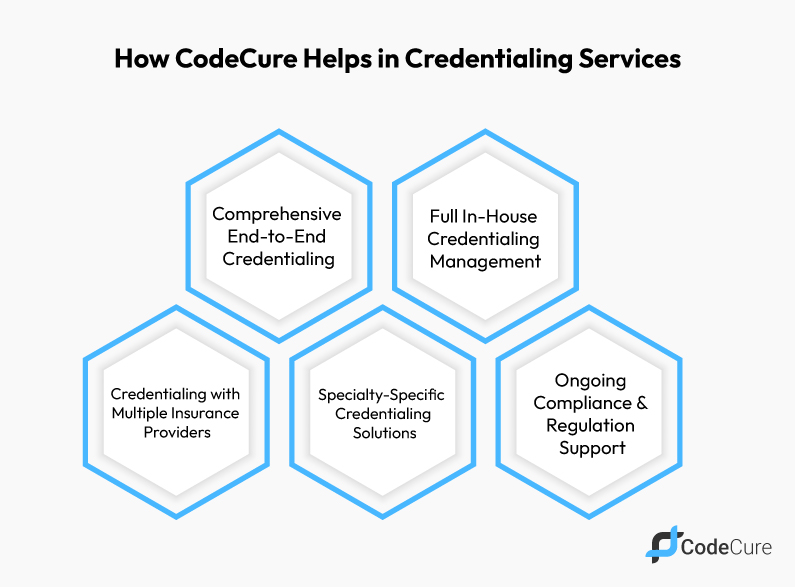
Our expert team ensures that your practice remains fully compliant, receives timely reimbursements, and operates smoothly, allowing you to focus on what matters most: patient care. Here’s how we help:
Comprehensive End-to-End Credentialing
- From the initial credentialing process to recredentialing, we handle every step of the journey. We ensure that all documentation, applications, and verification processes are completed efficiently, so you’re always ready to bill and receive reimbursements.
Full In-House Credentialing Management
- With CodeCure, you can outsource your entire credentialing process to us. We manage all payer applications, verification, and paperwork, freeing up your practice’s time and resources. You won’t need to worry about administrative burdens—we’ll handle everything for you.
Credentialing with Multiple Insurance Providers
- We navigate the credentialing process for a wide range of insurance companies and government programs, including Medicare and Medicaid. This ensures your practice has access to all necessary payers, helping you expand your patient base and increase revenue.
Specialty-Specific Credentialing Solutions
- Whether you’re a primary care provider or a specialist, we tailor our credentialing process to fit the unique needs of your practice. From verifying medical credentials to specialized certifications, we handle it all, ensuring compliance with your industry standards.
Ongoing Compliance & Regulation Support
- We keep up with the ever-evolving state and federal regulations, so your practice never misses a beat. With CodeCure, your credentialing process stays up to date, minimizing the risk of delays, denied claims, or compliance issues.
Why Choose CodeCure?
Credentialing is a crucial part of your practice’s financial health, and CodeCure makes it simple and efficient. Here’s why you should choose us:
- Reduce Administrative Costs
- Minimize Errors
- Ensure Timely Reimbursement
- Hassle-Free Experience
Conclusion:
Credentialing is a crucial process for healthcare providers, impacting legal compliance, patient safety, and reimbursement. By understanding the factors that influence credentialing costs and adopting strategies to streamline the process, healthcare practices can reduce costs and ensure smooth cash flow.
If you’re looking to simplify your credentialing process and reduce expenses, contact CodeCure today. We can help streamline your credentialing, minimize errors, and ensure faster reimbursement in 2026.
FAQs
1. What is healthcare credentialing?
Healthcare credentialing is the process of verifying the qualifications, training, and experience of healthcare providers to ensure they meet the required standards set by insurance companies, government programs, and medical organizations. Credentialing is essential for providers to be reimbursed for their services.
2. Why is credentialing important for healthcare providers?
Credentialing is important because it ensures that healthcare providers meet industry standards for delivering safe and effective care. It also allows providers to be reimbursed by insurance companies and government programs like Medicare and Medicaid. Without proper credentialing, healthcare providers cannot bill insurance for their services.
3. How long does the credentialing process take?
The credentialing process typically takes 60 to 120 days. This time frame may vary depending on the specialty of the provider, the number of payers involved, and the completeness of the submitted documentation. For practices that need a faster turnaround, outsourcing credentialing can expedite the process.
4. What are the costs of credentialing for healthcare providers?
Credentialing costs can range from $300 to $1,000 for initial credentialing, depending on the specialty and payer requirements. Recredentialing generally costs between $100 and $500. Outsourcing credentialing services can cost between $500 and $2,500, depending on the complexity and scale of the practice.
5. How do I know if my healthcare provider is credentialed?
You can check whether a healthcare provider is credentialed by contacting the payer or insurance company they work with, as they maintain lists of credentialed providers. Additionally, some healthcare organizations may list their credentials on their websites or in public databases.
6. Can credentialing be done for multiple insurance companies at once?
Yes, credentialing can be done for multiple insurance companies at once. However, each insurer may have its own application process and documentation requirements. Many healthcare practices use professional credentialing services to manage these multiple applications efficiently.
7. What happens if a healthcare provider’s credentialing is denied?
If credentialing is denied, the provider cannot bill that insurer or program for their services. Denials can occur due to incomplete documentation, missed deadlines, or discrepancies in the provider’s qualifications. It is important to review the reasons for denial and resubmit the necessary information.
8. How often do healthcare providers need to be recredentialed?
Healthcare providers are typically required to be recredentialed every 2 to 3 years, depending on the payer or insurer. Recredentialing ensures that providers maintain their qualifications and comply with updated regulatory standards.
9. Can a healthcare provider work without being credentialed?
A healthcare provider cannot legally bill insurance companies or government programs like Medicare or Medicaid without being properly credentialed. However, they can still offer services to self-paying patients, but not receive reimbursement through insurance.