



In 2026, psychiatric credentialing is more critical than ever. With the ever-evolving healthcare landscape, new regulations, and the need for insurance companies to stay compliant, failing to keep your credentials updated can threaten your practice’s financial health, patient base, and growth. If you’re a psychiatric provider, you understand that credentialing is not just an administrative task; it’s essential to gaining access to a broader pool of patients, enhancing your credibility, and boosting the financial stability of your practice. Credentialing can feel daunting at times, but with the right strategy, it can be a path to growth and success. This guide will walk you through the steps to improve your credentialing process, explain why it’s essential, and highlight how CodeCure can help streamline the entire process.
What is Credentialing?
Credentialing is the process by which healthcare providers are approved by insurance companies and government programs (such as Medicare and Medicaid) to receive payment for services. Without proper credentialing, psychiatric practices face significant barriers, including claim denials, delayed payments, and lost revenue.
Why Do Patients Value Psychiatric Providers Who Are Credentialed?
Patients look for credentialed providers because it means they can use their insurance benefits and receive affordable care. Here’s why psychiatric credentialing matters to your patients:
- Insurance Utilization: According to a 2022 report, 78% of Americans rely on insurance to cover their healthcare costs. Credentialing makes your practice accessible to this large group, helping you grow your patient base.
- Cost Savings: Patients prefer in-network providers because they reduce out-of-pocket costs. Being credentialed with insurance companies makes mental health care more affordable for your patients, ensuring they seek your services instead of your competitors.
- Expanding Coverage for Holistic Care: Mental health treatment is increasingly recognized as a critical component of integrative healthcare. Many modern insurance plans cover not only therapy but also psychiatric evaluations, medication management, and other psychiatric services.
- Building Trust and Credibility: Credentialed providers are seen as more professional, trustworthy, and in compliance with industry standards. Patients are more likely to choose you when they know you meet all the necessary qualifications set by regulatory bodies.
Steps to Improve Psychiatric Credentialing Successfully
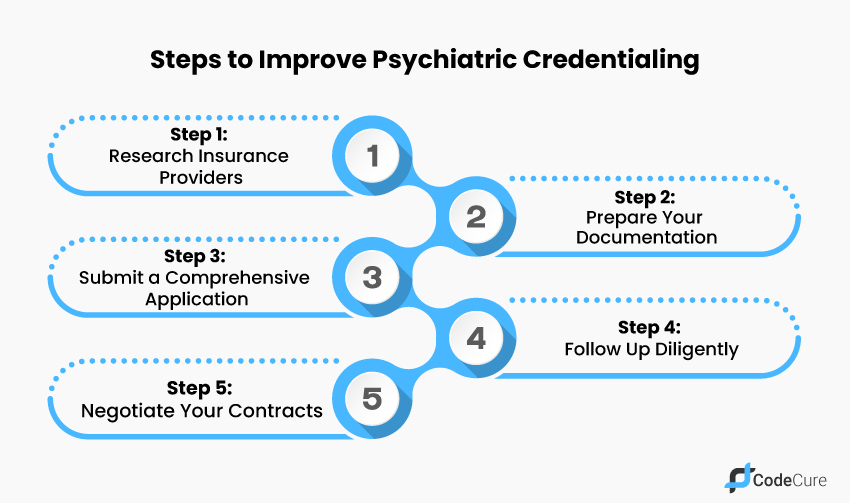
Credentialing might feel overwhelming, but when you break it down into simple steps, it becomes a manageable process. Here’s how to get started:
Step 1: Research Insurance Providers
Before you get credentialed with any insurance company, it’s essential to research which providers align with your psychiatric practice goals. Consider these factors:
- Reimbursement Rates: Are they competitive for the psychiatric services you provide, including therapy, evaluations, and medication management?
- Patient Base: Does the insurer cater to the population you serve (e.g., individuals with specific mental health conditions)?
- Requirements: What documentation do you need to submit? Make sure you’re prepared.
Step 2: Prepare Documentation
Credentialing requires accurate documentation. Avoid delays by preparing these essential documents in advance:
- State License and National Certifications: Ensure your license is current.
- National Provider Identifier (NPI): This number is vital for insurance billing.
- Malpractice Insurance: Provide proof of your coverage.
- Educational and Training Records: Ensure your qualifications are up to date and recognized by regulatory bodies.
- CAQH Profile: Ensure your profile is complete and attested for faster processing.
Step 3: Submit a Comprehensive Application
There’s no one-size-fits-all credentialing application. Each insurance company may have different requirements, so be sure to:
- Double-check for errors: Even small mistakes can delay the process.
- Provide accurate billing and contact information: Any inconsistencies can result in rejection.
Step 4: Follow Up Diligently
The credentialing process can take anywhere from 90 days to 6 months. Regularly follow up with insurance companies to check the status of your application. Being proactive will ensure that your application doesn’t get stuck in a backlog.
Step 5: Negotiate Contracts
Once you’re credentialed, you’ll receive a contract outlining reimbursement rates and policies. Don’t hesitate to negotiate for better terms that reflect the value of the care you provide.
Credentialing Checklist for Psychiatric Providers
To ensure you meet all the requirements, here’s a checklist:
✔️ Verify educational qualifications
✔️ Confirm active state licensure
✔️ Ensure valid malpractice insurance
✔️ Collect work history and experience
✔️ Check continuing education requirements
✔️ Complete and submit the credentialing application
✔️ Track recredentialing timelines
2. Delayed Payments
Even if claims are not completely denied, improper credentialing can lead to payment delays, as insurers may place claims on hold until credentialing issues are resolved. These delays can hurt cash flow, especially for practices that rely on timely reimbursements.
3. Increased Administrative Burden
Inconsistent credentialing can lead to an increase in administrative work. Staff members will need to spend extra time following up on unpaid claims and resolving credentialing issues, diverting attention from other important tasks, like patient care and business growth.
How Credentialing Gaps Are Affecting Psychiatry Practices in 2026
The psychiatric industry has long faced credentialing challenges, but in 2026, these issues have become more complex. Below are some of the key ways credentialing gaps are impacting psychiatry practices across the country:
1. Telehealth Credentialing Challenges
The rise of telehealth services in 2026 has introduced a new set of credentialing hurdles for psychiatry practices. Even if a provider is already credentialed for in-person care, telepsychiatry requires a separate credentialing process. Additionally, many payers now require telehealth-specific enrollment in each state, leading to complications for providers who are licensed in multiple states but not enrolled with every payer.
Example: A psychiatrist in Florida was denied payment for telehealth consultations because they were not credentialed for Medicare Advantage telehealth in the state, despite being fully credentialed for in-person care.
2. State-Specific Medicaid Credentialing
States like California and Texas are still facing significant challenges with Medicaid credentialing, resulting in payment delays for psychiatry practices. Since Medicaid policies vary by state, practices must stay updated with each state’s specific requirements, especially for telehealth services. Failing to update Medicaid records can lead to claim denials.
Example: A New York-based psychiatry practice had 30+ denied claims after Medicaid rejected their claims for telehealth services because they hadn’t updated the credentialing for their providers.
3. Medicare Advantage Plans Becoming More Strict
As Medicare Advantage plans continue to gain popularity in 2026, practices are encountering more credentialing issues related to these plans. Many Medicare Advantage plans are imposing stricter enrollment requirements for telehealth providers. If a practice doesn’t meet these stricter standards, they may experience delayed payments or claim rejections.
Example: A psychiatry clinic in California found that claims for Medicare Advantage patients were being rejected because the clinic wasn’t enrolled for telehealth services under Medicare Advantage.
How Credentialing Benefits Psychiatric Practices
Credentialing is more than just paperwork; it’s a strategy to enhance your practice. Here’s how it helps:
- Increased Patient Base: Credentialing gives you access to a broader audience of insured patients, making your practice more visible.
- Improved Patient Retention: Patients are more likely to return when you accept their insurance, leading to greater consistency in patient visits.
- Higher Revenue Potential: Being credentialed allows you to bill for a variety of treatments, including psychiatric evaluations, therapy, and medication management.
- Competitive Advantage: Credentialed providers are seen as more professional and compliant, making them a preferred choice for insured patients.
Common Challenges in Psychiatric Credentialing and How to Overcome Them
While credentialing offers numerous benefits, it does come with its own set of challenges:
- Lengthy Process: Credentialing can take a long time, often ranging from 3 to 6 months. To avoid delays, start early and be diligent in submitting accurate documentation.
- Rejections: Missing or incomplete documentation can lead to application rejection. Double-check all your information and stay on top of deadlines.
- Administrative Burden: Managing the credentialing process while also caring for patients can be overwhelming. Consider delegating administrative tasks to a specialized team or using credentialing services.
- Loss of Revenue: When credentialing is incomplete or incorrect, claims are denied, and practices lose revenue. For example, a psychiatry practice that regularly submits claims to Medicare and Medicaid without ensuring that all providers are credentialed for telehealth may face denials for virtual consultations, even though the service is medically necessary.
- Delayed Payments: Even if claims are not completely denied, improper credentialing can lead to payment delays, as insurers may place claims on hold until credentialing issues are resolved. These delays can hurt cash flow, especially for practices that rely on timely reimbursements
How CodeCure Can Help with Psychiatric Credentialing and Billing Services
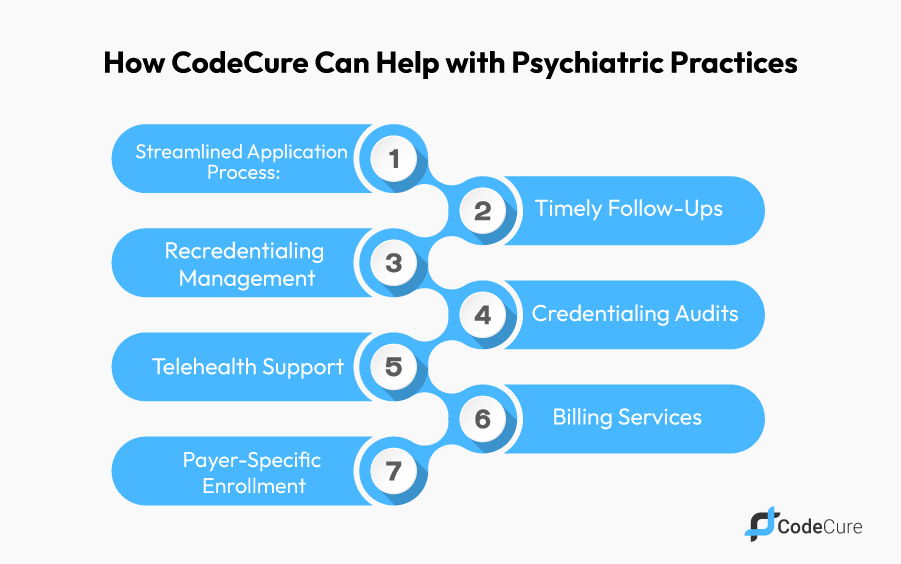
At CodeCure, we simplify psychiatric credentialing and medical billing to help you focus on patient care. Here’s how we support your practice:
- Credentialing Application: We handle all the paperwork, ensuring complete and accurate submissions to insurance companies. We follow up proactively to avoid delays.
- Recredentialing: We track your recredentialing deadlines and ensure your credentials are always up-to-date.
- Credentialing Audits: Regular audits to identify gaps and verify your providers are properly credentialed with Medicare, Medicaid, and private insurers to prevent claim denials.
- Telehealth Support: We ensure your telehealth providers are credentialed with every payer across all states they serve, reducing telehealth claim rejections.
- Billing Services: Our team handles accurate coding, claims submissions, and follow-ups to maximize reimbursements and minimize denials.
- Payer-Specific Enrollment: We manage payer-specific enrollment and renewals to stay compliant and avoid missed deadlines.
CodeCure provides a seamless solution for both credentialing and billing services, ensuring smooth operations and prompt reimbursements for your practice.
Final Thoughts
Psychiatric credentialing is a crucial part of your practice’s growth strategy. By becoming credentialed with insurance companies, you make your services more accessible, improve your patient base, and enhance your practice’s financial stability. Though the process can seem daunting, staying organized and using professional credentialing services like CodeCure can make it much easier and more efficient.
Ready to simplify your credentialing process? Contact CodeCure today, and let us help you streamline your credentialing and recredentialing, so you can focus on what matters most: providing high-quality care to your patients.
FAQ
What is psychiatric credentialing?
Credentialing is the process of getting verified by insurance companies to provide services and receive reimbursement for psychiatric care.
How long does the credentialing process take?
Credentialing can take anywhere from 90 days to 6 months, depending on the insurer and the completeness of your application.
How often does recredentialing occur?
Recredentialing typically happens every 2-3 years, depending on state and national regulations.
Can CodeCure help with credentialing?
Yes! CodeCure specializes in streamlining the credentialing and recredentialing process for psychiatric providers, ensuring all paperwork is accurate and deadlines are met.