



Healthcare providers across the United States are under increasing financial pressure. While patient volumes continue to grow, many medical practices, physician groups, and healthcare organizations are struggling with slower reimbursements, rising claim denials, staffing shortages, and growing patient balances. One of the biggest reasons is unworked A/R—earned revenue trapped in aging claims, unresolved denials, underpayments, and unpaid patient balances.
Every day an account remains in unworked A/R, the chances of recovering that revenue decline. What begins as a routine follow-up can quickly become a missed appeal deadline, a timely filing issue, or a permanent write-off. For healthcare providers operating on tight margins, reducing unworked A/R is essential to improving cash flow, maximizing reimbursements, and protecting long-term financial stability.
What Is Unworked A/R?
Unworked accounts receivable (A/R) refers to insurance claims, denied claims, underpayments, and patient balances that require follow-up but remain inactive beyond their expected resolution timeframe. Left unresolved, these accounts delay cash flow, increase write-offs, and reduce overall revenue. Healthcare providers can improve collections by implementing structured A/R follow-up, proactive denial management, payer reconciliation, and regular aging account reviews.
Why Aging Receivables Becomes More Expensive Over Time
Aging receivables lose value as they remain unresolved. The longer a claim stays unpaid, the more barriers appear to successful recovery. Payers enforce strict, timely filing limits and appeal deadlines. Once these windows close, reimbursement opportunities are significantly reduced or completely lost, even for valid claims. At the same time, internal resolution becomes more complex. Older claims often require additional documentation retrieval, coding validation, and payer escalation, each step increasing administrative effort while reducing success probability.
Key reasons aging receivables lose value:
- Timely filing limits restrict reimbursement eligibility
- Appeal deadlines expire for reconsideration
- Documentation becomes harder to retrieve or validate
- Older claims receive slower payer response times
- Internal focus shifts to newer claims
A claim that could have been resolved within 30 days often loses most of its recovery potential after 90–120 days.
The Financial Reality Facing Healthcare Providers
Industry benchmarks continue to highlight the importance of effective accounts receivable management.
| Revenue Cycle Metric | Industry Benchmark |
|---|---|
| Target Days in A/R | Less than 35–40 Days |
| A/R Older Than 90 Days | Less than 20% of Total A/R |
| Initial Claim Denial Rate | Below 5% |
| Net Collection Rate | Greater than 97% |
| Clean Claim Rate | Greater than 95% |
Healthcare organizations that consistently exceed these benchmarks often experience slower reimbursements, increasing administrative costs, and reduced operating margins. While every specialty has unique reimbursement challenges, aging accounts receivable remains one of the most reliable indicators of revenue cycle health.
Where Healthcare Practices Lose the Most Revenue
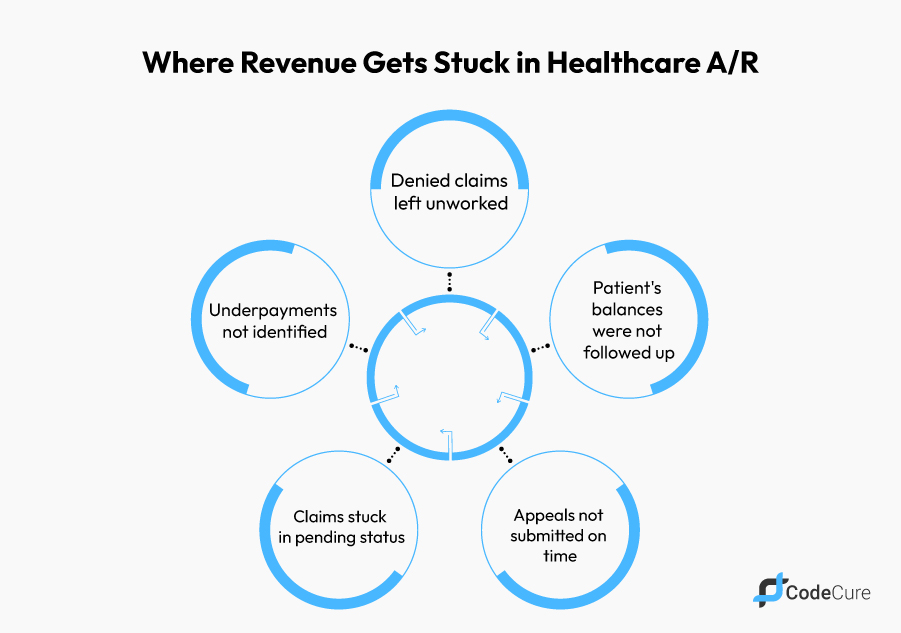
Revenue leakage rarely comes from a single source. Instead, it accumulates throughout the revenue cycle, creating multiple points where earned revenue can be delayed or lost.
1. Unresolved Claim Denials
Denied claims remain one of the leading causes of delayed reimbursement. While many denials are preventable, the real financial loss occurs when denied claims are not corrected and appealed within payer deadlines.
Common denial causes include:
- Missing prior authorization
- Coding or modifier errors
- Medical necessity documentation
- Eligibility verification issues
- Duplicate claim submissions
- Timely filing violations
Every unresolved denial increases administrative costs while reducing recovery potential.
2. Insurance Underpayments
Underpayments occur when reimbursement is lower than expected or contractually agreed rates. These issues often go unnoticed because payment is still received. They may result from contract misinterpretation, coding discrepancies, or payer system errors. Without regular reconciliation, underpayments repeat across claims and silently reduce total revenue.
3. Patient Balances
Patient responsibility is increasing due to higher deductibles and co-insurance requirements. These balances often age quickly when collection workflows are inconsistent.
Unlike insurance claims, patient receivables require structured communication and proactive follow-up. Without this, balances often convert into bad debt.
4. Workers’ Compensation Claims
Workers’ compensation billing requires strict documentation, authorization, and employer verification. Delays often occur when the required information is incomplete at the time of service.
Because of complex payer rules, these claims frequently require extended follow-up cycles.
5. Personal Injury Claims
Personal injury claims involve third-party liability and extended settlement timelines. Coordination between providers, insurers, and legal entities adds complexity.
Without structured tracking, these claims can remain open for long periods, tying up significant revenue.
How High-Performing Practices Control A/R
Leading healthcare organizations treat A/R as an active revenue function, not a passive report. They rely on structured workflows that keep claims moving through the revenue cycle, helping them reduce AR Days while improving cash flow and reimbursement performance.
Key practices include:
- Daily or scheduled A/R monitoring to track aging trends
- Denial trend analysis to identify recurring payer issues
- Early detection of underpayments through reconciliation
- Structured follow-up workflows based on claim age and priority
- Escalation pathways for high-value claims
Accountability is clearly defined at every stage, preventing claims from being lost between workflows.
Technology’s Growing Role in A/R Management
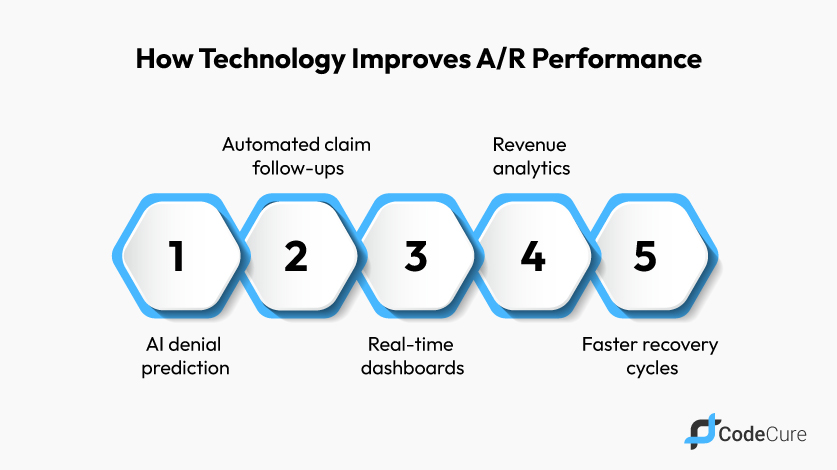
Technology is improving visibility and speed across the revenue cycle. Instead of relying on manual reports, practices now use real-time systems to track claim status and aging trends.
Key advancements include:
- AI-driven denial prediction models
- Automated claim follow-up workflows
- Real-time A/R dashboards
- Underpayment detection tools
These tools do not replace billing teams; they enhance efficiency and reduce delays in recovery.
Why Healthcare Providers Choose CodeCure for Accounts Receivable Recovery
CodeCure helps healthcare providers turn aging accounts receivable into recovered revenue through proactive A/R recovery, denial resolution, underpayment analysis, and payer follow-up. Our data-driven approach identifies hidden revenue opportunities, accelerates collections, reduces write-offs, and improves cash flow—helping your practice recover more of the revenue you’ve already earned without disrupting your existing billing operations.
Conclusion
Unworked accounts receivable is one of the biggest hidden sources of revenue loss in healthcare. Unresolved claims, denials, underpayments, and aging patient balances delay cash flow and become harder to recover the longer they remain untouched.
By improving A/R follow-up, reducing denials, leveraging automation, and monitoring key revenue cycle metrics, healthcare providers can accelerate collections and strengthen financial performance. CodeCure’s Accounts Receivable Recovery Services help practices recover outstanding revenue, reduce aging A/R, and build a healthier, more predictable cash flow.
Frequently Asked Questions
How much A/R over 90 days is considered acceptable?
Most revenue cycle experts recommend keeping A/R over 90 days below 20% of total accounts receivable. Higher percentages may indicate workflow inefficiencies, delayed payer follow-up, or unresolved denials.
Can old insurance claims still be recovered?
Yes. Many aging claims can still be recovered if they remain within payer filing and appeal deadlines. Prompt follow-up, accurate documentation, and effective denial management significantly improve recovery rates.